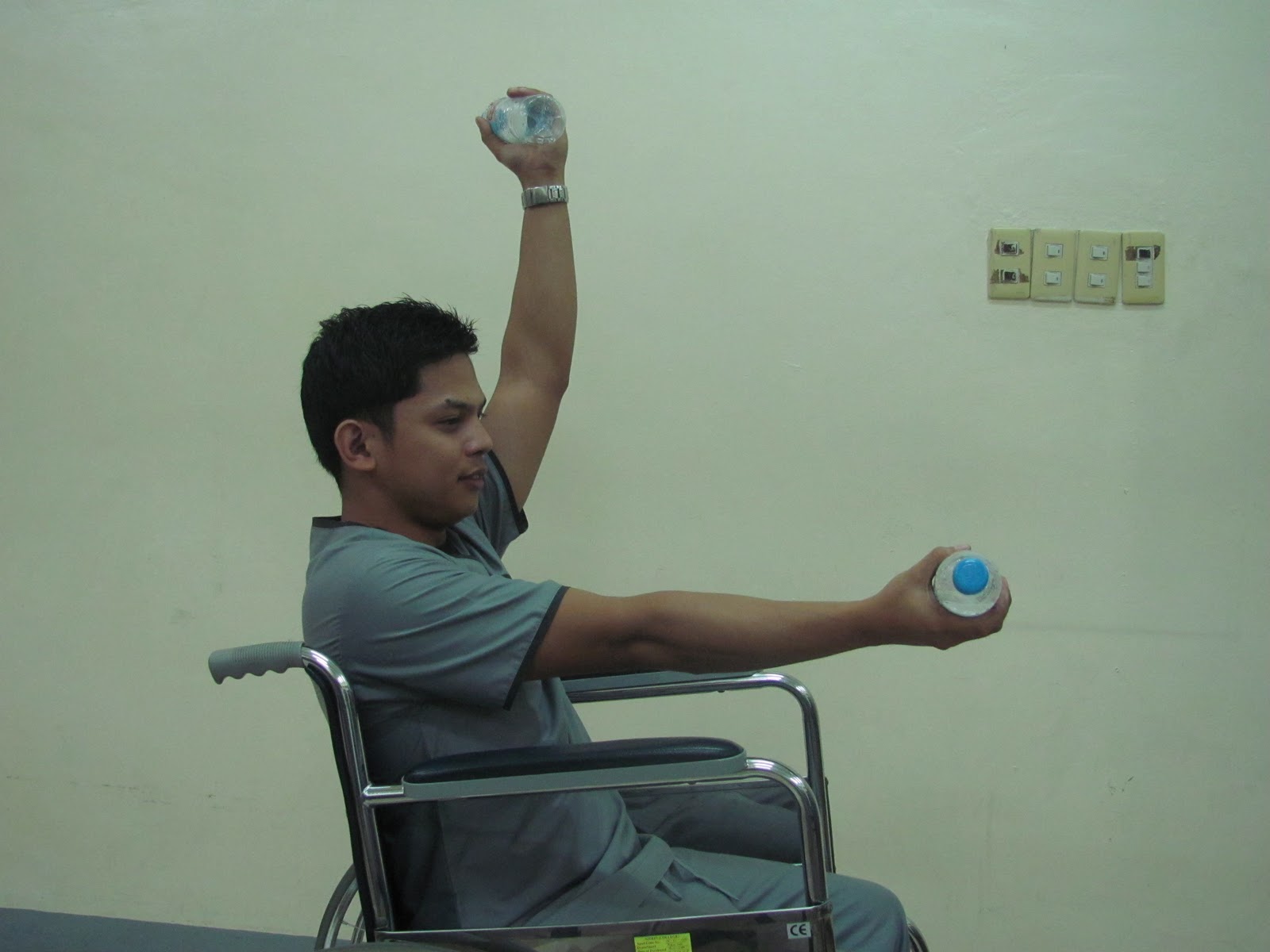
Now comes the second part of the expenses, upon discharge of a patient and brought home its time to deal with the refitting of the residence to the present needs of the patient. Then one will include continuation of medicine, needed diagnostic test for monitoring and scheduled checkups with their physician.
Now why am I trying to enumerate all of these and yet the title is importance of Physical Therapy. Well simply stating it, a patient who is brought home and has lost the ability to be independent in activities of daily living (walking, dressing, eating, walking, bathing, working etc), needs assistance and caregiving. Which in order to achieve independence partial or complete, needs to undergo physical therapy. Now the other concern is, did physical therapy start while in the hospital or just an afterthought upon dischage?
Unfortunately, this is something that is not sometimes discussed to the patient/relatives and if by any chance discussed, may be considered as a miscellaneous expense and not a required expense. What am I pointing out? If a patient is asked to buy medicines and/or undergo physical therapy, what will the patient/relative do? The patient/relatives may opt to have both but oftentimes will opt to have the medicine and forego the physical therapy. The would be possible reasoning is, "Pwede naman yan pag lumabas na ng hospital" (That can be done already once the patient is discharged).
Again unfortunately, it may be initially less expensive if physical therapy is not done during confinement but how is it in the long run? An article done by Ruth M. Kleinpell, Kathcy Fletcher and Bonnie Jennings in Patient Safety and Quality: An Evidence-Based Handbook for Nurses pointed out the ff:
1. I quote " A dissonance exists between the hospital environment and therapeutic goal for the hospitalized elderly." (This means the goal is to make them medically stable but not functionally recovered upon discharge)
2. By Day 2 deconditioning and functional decline was evident on elderly individuals.
3. Elderly patients who was assessed during confinement showed that from day 2 to discharge, 67% showed no improvement and 10 percent showed further decline.
It then just shows that if an individual further declines in functional status that means, EXTRA care/assistance. Which is equivalent to a caregiver or nurse stay at home. If the patient is fully dependent you might need 2 caregivers in 1 duty shift. Or even to the point that the relative/love one would stop or not work in order to take care of the patient. That is lost productivity not only for the patient but also for the relative taking care of him/her.
And study shows that a deconditioned muscle (due to disuse or non use), needs 2 to 3 times the duration to be strengthened back to its original condition as compared to its deconditioning. So for example, the lower limbs lost its strength for 2 weeks of bedrest/immobility, it will need 4 to 6 weeks before it regains its former strength. And that is for young individuals, what more for elderly or those who became debilitated?
The Evidence Based Review of Stroke Rehabilitation (ESBSR), states that there is strong evidence that greater intensities of physiotherapy and occupational therapy resulted in improved functional outcomes after stroke. This then points to the fact that in the long run, which is the usual duration for those who have a stroke will benefit on early intervention to minimize potential prolonged bedridden and immobilization complications management. These complications, such as bedsores, pulmonary conditions, lower limb edema, joint stiffening, fully dependent on all activities, depression etc, may then prove more costly than having early intervention.
Table 1 shows the effect of prolonged bed rest. (click Table to enlarge)
*Source/Table were it was taken from is noted at end of article.

Conclusion: Patients who had debilitating conditions that affect their functional status during confinement should be assessed properly if early physical therapy intervention is needed or not. Talk to your attending physician so that the recommended Physical Medicine and Rehabilitation specialist can discuss and provide the benefits and consequences or early physical/occupational therapy. Know your options so that you can decide on what would be more beneficial for the patient as well as for the love ones.
* Ruth M. Kleinpell, Kathcy Fletcher and Bonnie Jennings in Patient Safety and Quality: An Evidence-Based Handbook for Nurses
Next article would be the difference between neurological and functional recovery.